Wage Structure Review
Review basic pay, allowances and other remuneration components against the applicable definition of wages.

The Code on Wages, 2019 brings together important provisions relating to wages, minimum wages, payment of wages and bonus. For employers, understanding how these requirements affect salary structures, payroll processes and statutory records is essential to maintaining compliant operations.
G&CC Management Services supports organisations across India with practical wage compliance advice, documentation reviews, payroll alignment and implementation assistance tailored to their workforce and business activities.
Wage compliance involves more than calculating monthly salaries. Employers need to consider applicable minimum wage notifications, the definition of wages, deductions, overtime, bonus eligibility, payment timelines and supporting employment records.
Our team helps HR, finance and compliance departments assess existing practices, identify potential gaps and build consistent wage administration processes across locations.
Wage Structure • Payroll • Statutory Compliance
The Code on Wages, 2019 consolidates four central labour laws: the Payment of Wages Act, 1936; the Minimum Wages Act, 1948; the Payment of Bonus Act, 1965; and the Equal Remuneration Act, 1976. Its framework addresses wage definitions, minimum and floor wages, timely payment, deductions, bonus and non-discrimination in wage-related matters.
Actual obligations depend on applicable commencement notifications, rules, establishment type and jurisdiction. Employers should review the requirements relevant to each location before changing salary structures or payroll practices.
Review basic pay, allowances and other remuneration components against the applicable definition of wages.
Assess wage rates against relevant central or state notifications, employee categories and locations.
Review wage periods, payment timelines, deductions, payslips and payroll controls.
Evaluate overtime calculation and bonus processes under the applicable legal provisions.
Support maintenance of registers, payroll evidence, wage statements and compliance documentation.
Identify gaps, recommend corrective measures and prepare teams for regulatory review.
We take a practical, step-by-step approach to wage compliance that works alongside existing HR and finance processes.
Our advisory services are relevant to manufacturing units, factories, corporate offices, IT and ITES companies, retail chains, logistics operations, construction businesses, service providers and organisations managing employees across multiple states. We also assist businesses reviewing contractor wage practices and internal payroll controls.
G&CC combines labour law advisory with hands-on experience in payroll, statutory compliance and multi-location workforce management. Our focus is on practical solutions that help businesses understand their responsibilities, strengthen documentation and manage compliance more consistently across India.
Streamline it all with our proprietary compliance platform:
Track and monitor compliance tasks
Real-time insights through reports and dashboard
Manage regulatory changes and eliminate compliance deviations
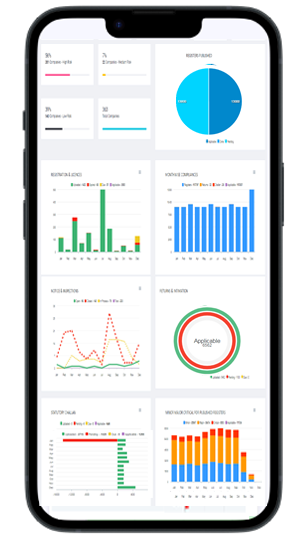
Digitally verify employee data to process statutory records
Digitally generate Registers and Returns
The Code on Wages, 2019, is an Indian labour law that consolidates four earlier laws relating to wages, minimum wages, payment of wages, and bonus. It aims to establish a more uniform framework for wage-related compliance.
The Code on Wages applies broadly to employers and establishments across India, including manufacturing units, factories, corporate offices, commercial establishments, and service-sector organisations, subject to applicable provisions.
The Code introduces a standardised definition of wages covering specified salary components and exclusions. Certain excluded allowances exceeding the prescribed limit may need to be added back when calculating wages for applicable statutory purposes.
The Code contains a provision under which specified excluded remuneration exceeding 50% of total remuneration, or another notified percentage, is added back to wages. Employers should review salary structures and the applicable rules to determine the correct treatment.
The wage definition may affect certain employment benefit calculations, depending on the applicable legislation and implementation provisions. Employers should assess PF, gratuity, and other statutory obligations separately rather than assuming identical calculation rules.
Employers must comply with applicable minimum wage rates notified by the appropriate government. These may vary according to location, employment category, skill level, and other prescribed classifications.
Where the applicable overtime provisions apply, employees working beyond prescribed working hours must receive overtime wages at a rate of at least twice their normal wage rate, subject to relevant rules.
The Code includes provisions concerning eligibility, calculation, payment, and limits relating to statutory bonus. Employers must assess their obligations based on applicable thresholds and prescribed conditions.
Employers may be required to maintain wage registers, employee records, attendance details, overtime records, payment information, and other prescribed statutory documents in accordance with applicable rules.
Businesses should review salary structures, minimum wage classifications, payroll systems, overtime practices, bonus calculations, employment documentation, and statutory records. A compliance assessment can help identify areas requiring changes.